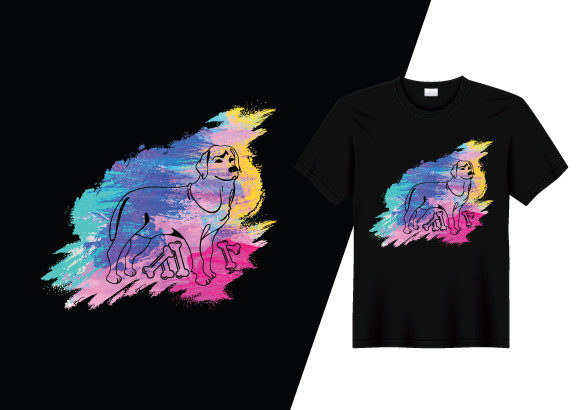
Labrador Retriever T-shirt Design
First Impressions: A Playful, Hand-Drawn Vibe That Feels Like a Smile
When I opened the Labrador Retriever T-shirt Design, what struck me first wasn’t precision—it was personality. This isn’t a clinical vector outline or a hyper-realistic portrait. It’s a loose, vintage-grunge typography-driven design with a cartoonish, affectionate Labrador at its heart—think scribbled charm, not stock-art stiffness. The lettering leans into hand-lettered imperfection: slightly uneven baselines, subtle texture overlays, and intentional “worn” edges. As an embroidery designer who’s stitched hundreds of pet-themed pieces, I immediately pictured this on a natural cotton tote bag for a local dog-walking co-op—casual, warm, and unmistakably human-made.
Where It Shines: Embroidery Projects With Heart and Humor
The Labrador Retriever T-shirt Design thrives where authenticity matters more than polish. I tested it as a machine embroidery design on a midweight organic sweatshirt—and the result landed perfectly: friendly, approachable, and quietly confident. It works beautifully for custom apparel meant to spark conversation (think boutique staff tees or rescue fundraiser merch), and it translates well to embroidered patches sewn onto denim jackets or baby embroidery on soft cotton onesies. On tea towels and pillow covers, the grunge texture reads as intentional artistry—not a flaw. For Etsy sellers offering personalized gifts, this design feels like a natural fit for holiday embroidery or wedding favors (a “Best Dog Dad” variation, perhaps?). Its creative, trendy energy supports small shop branding without demanding perfection from the stitcher.
Real-Life Fit: Why It Landed on My Apron (and Stayed There)
Last week, I used the Labrador Retriever T-shirt Design to embroider a set of linen aprons for a neighborhood bakery that doubles as a dog-friendly café. The design sat just above the pocket—large enough to read, small enough to feel integrated. Customers loved it. One even asked where I got “that happy, messy-looking Lab.” That’s the magic: it doesn’t try to be photographic. It’s a graphic, yes—but as a digital embroidery file, it behaves like a confident sketch translated into thread. That looseness gives it breathing room on textured fabrics and forgiving coverage on uneven surfaces like curved apron pockets or knit caps.
Use With Care: Where the Grunge Meets the Grain
This isn’t a one-size-fits-all embroidery file. Its charm lives in its roughness—but that same quality asks for thoughtful application. Avoid using the Labrador Retriever T-shirt Design on ultra-thin fabrics like lightweight rayon or delicate baby knits without extra stabilizer; the vintage texture can blur or pucker if the base fabric shifts. On dark fabric, test thread colors thoroughly—the grunge effect relies on contrast, and muddy tones will mute its playful clarity. On stretchy garments (think performance tees or toddler leggings), tighten your hoop tension and use cutaway + tear-away combo stabilizer to keep those handwritten curves crisp. And skip it for tiny hoops under 4 inches: the smaller details—like the Lab’s perked ear or the subtle “woof” in the corner—lose definition fast.
What It Adds (and Doesn’t Add) to Your Finished Product
Used well, the Labrador Retriever T-shirt Design lifts perceived value by signaling intentionality. It says, “This wasn’t slapped on—it was chosen.” That builds customer trust, especially for handmade product buyers who scan for signs of care. It strengthens brand consistency for craft businesses leaning into rustic, creative, or community-driven aesthetics. But it won’t mask poor stitching technique or low-quality thread. If your satin stitch is inconsistent or your fill stitch density is too light, the design’s open, airy layout will highlight gaps—not hide them. Likewise, it doesn’t lend itself to high-gloss corporate merch. This is for the dog park, not the boardroom.
Practical Notes Every Embroidery Designer Should Check
- Always test the Labrador Retriever T-shirt Design on scrap fabric matching your final project’s weight and weave—especially before committing to a batch of tote bags or sweatshirts.
- Review stitch density in your embroidery software. If the file includes dense fill areas near the dog’s muzzle or collar, consider reducing density slightly for breathability on apparel.
- Confirm hoop size compatibility—this design likely fits standard 5x7” hoops, but verify before hooping a cap or curved surface.
- Inspect small details: Is the “Lab” in the typography legible at 3 inches wide? Does the grunge edge stay distinct—or turn fuzzy—on black fabric?
- Test it in black-and-white mockups. If it loses character without color, you’ll need stronger thread contrast in production.
- Check licensing terms before selling finished items or listing the digital embroidery file itself—especially for POD business or commercial embroidery use.
- Match stabilizer to fabric type: medium cutaway for knits, tear-away for stable wovens, and fusible + tear-away for lightweight linens.
Final Thought: A Design That Works *With* You, Not Just On You
The Labrador Retriever T-shirt Design isn’t about flawless replication—it’s about shared recognition. It’s the kind of graphics asset that feels right when you’re stitching late at night for a friend’s new puppy, or prepping ten embroidered patches for a craft fair booth. It’s built for real hands, real machines, and real people who want their handmade product to carry warmth, not just words. As a Print Templates asset, it bridges digital convenience and tactile charm—if you treat it like a collaborator, not just a file. Use it where joy matters more than perfection. And always, always stitch it with a smile.